Websites for Tutors
Does a Tuition Teacher Need a Website or Is Facebook Enough?
A practical comparison for tuition teachers deciding whether Facebook alone is enough or whether a website or landing page would support enquiries better.
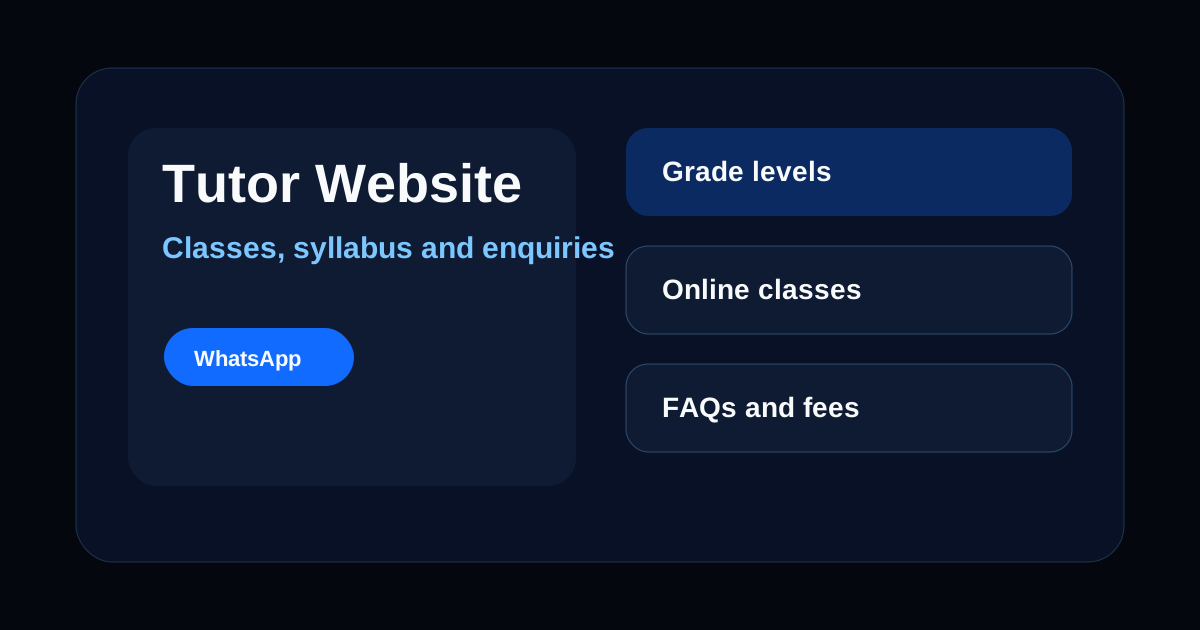
Facebook can be useful for tuition teachers, and many teachers start there for good reasons. A website becomes useful when students or parents need clearer information, easier enquiry paths and a more organised place to compare classes.
What Facebook Does Well
Facebook is familiar, quick to update and useful for community visibility. Teachers can post class announcements, photos, short updates, student reminders and seasonal intake notices without needing a website dashboard.
For a teacher with a small local group, enough word-of-mouth, and no need to explain many class options, Facebook may be enough for a while.
Where Facebook Becomes Limited
Depending only on Facebook can make information difficult to organise. Class levels, syllabuses, online options, fees, schedules, FAQs and teacher background can get buried under older posts.
Parents searching on Google may also struggle to find a clear page for a specific need such as O/L English, Cambridge maths, piano lessons, singing lessons or online exam preparation.
How a Website Helps Parents and Students
A tutor website gives each class or syllabus a proper home. A mathematics teacher can separate Cambridge IGCSE, Edexcel IGCSE and A Level pages. A music teacher can separate piano, theory, singing and composition. An English teacher can explain age groups, grammar support, writing and exam preparation.
The goal is not to replace Facebook. The goal is to give serious parents and students a calm, organised place to understand the classes before they send a WhatsApp message or form enquiry.
Using Facebook and a Website Together
Facebook can continue to handle updates and community activity. The website can hold evergreen information: class options, teacher profile, FAQs, syllabus pages, location, online class details and enquiry buttons.
This combination is often stronger than choosing one channel only. Social media creates activity, while the website creates clarity.
When a Landing Page Is Enough
A full website may not be necessary for a teacher who only has one class type or one intake campaign. A focused landing page can explain the offer, show the class details and collect WhatsApp or form enquiries.
A complete website becomes more justified when there are multiple subjects, syllabuses, grade levels, locations, online classes, resources or course pathways.
Examples for Different Teachers
Music teachers may need pages for lessons, online learning, exam preparation and composition services. Mathematics teachers may need syllabus-specific pages and parent-friendly explanations. English teachers may need class levels, learning outcomes and writing or speaking support pages.
Online tutors and exam-preparation teachers often benefit from clear FAQs, timetable information, fee guidance and enquiry forms that send structured details through the configured notification method.
Conclusion
A tuition teacher does not always need a large website. But when class information is scattered, enquiries repeat the same questions, or parents need more confidence before contacting you, a website or landing page can make the decision easier.
The best setup is usually simple: keep using Facebook for updates, and use the website as the organised home for your classes.
Relevant next step
Continue with Explore tutor websites, or review the selected website projects for practical examples.
Need a Website for Your Tuition Classes?
Explore tutor and educator websites for class pages, syllabus information, WhatsApp enquiries and structured forms.
Explore Tutor Websites